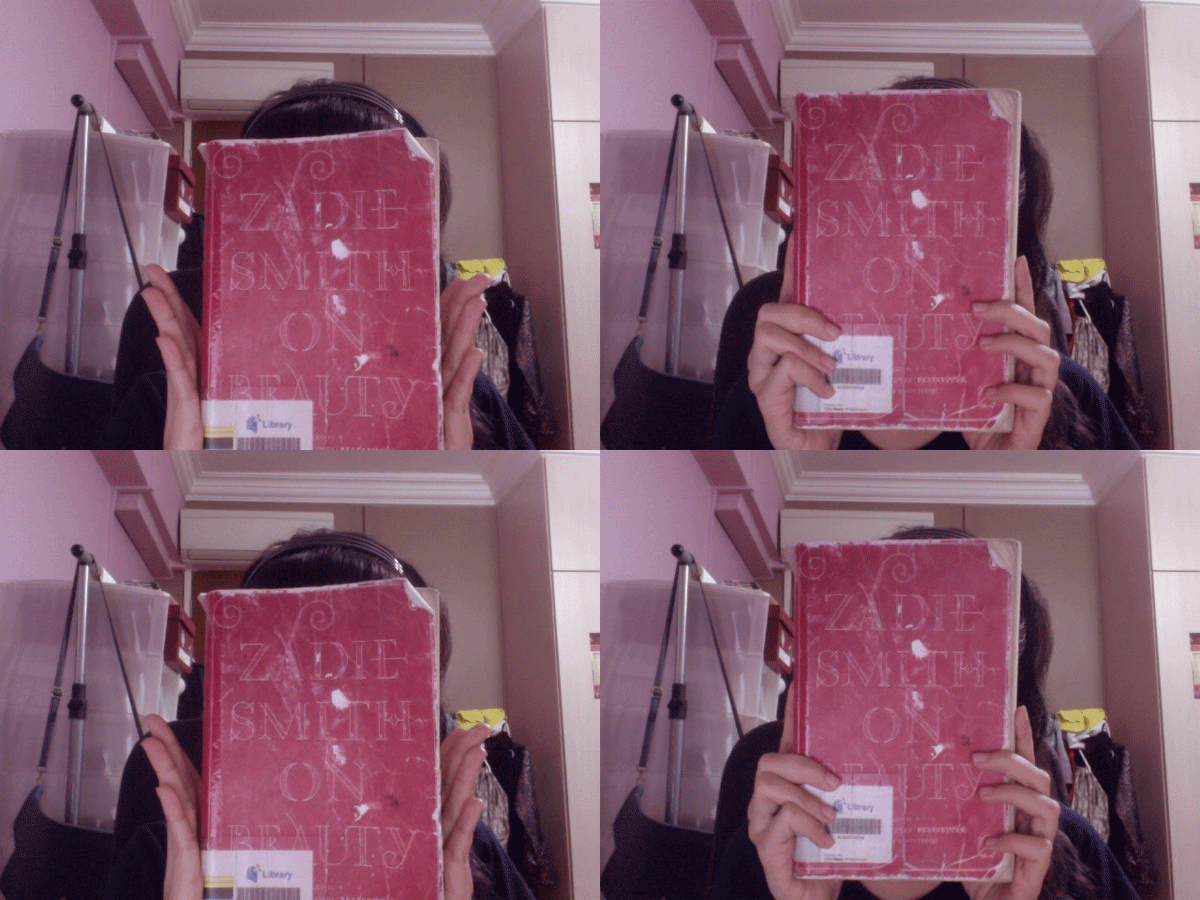
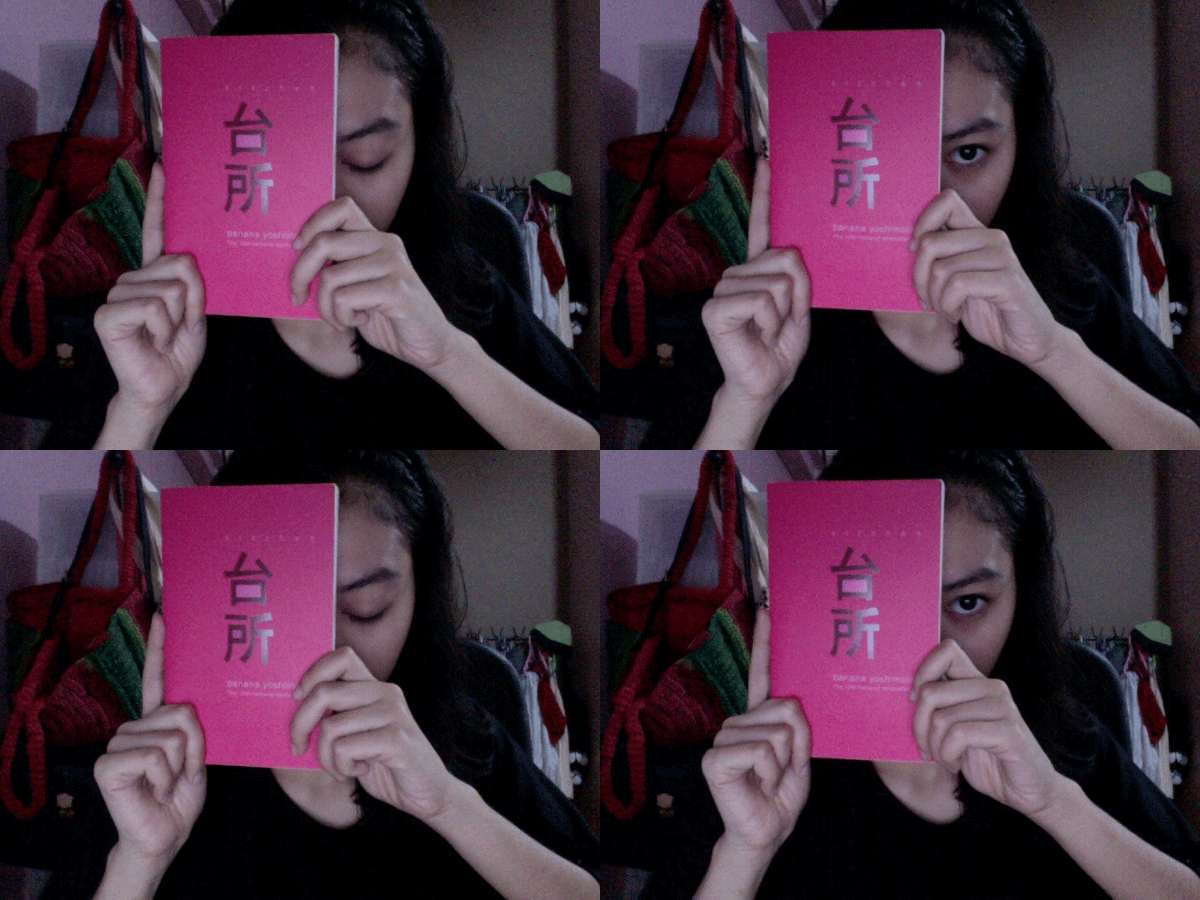
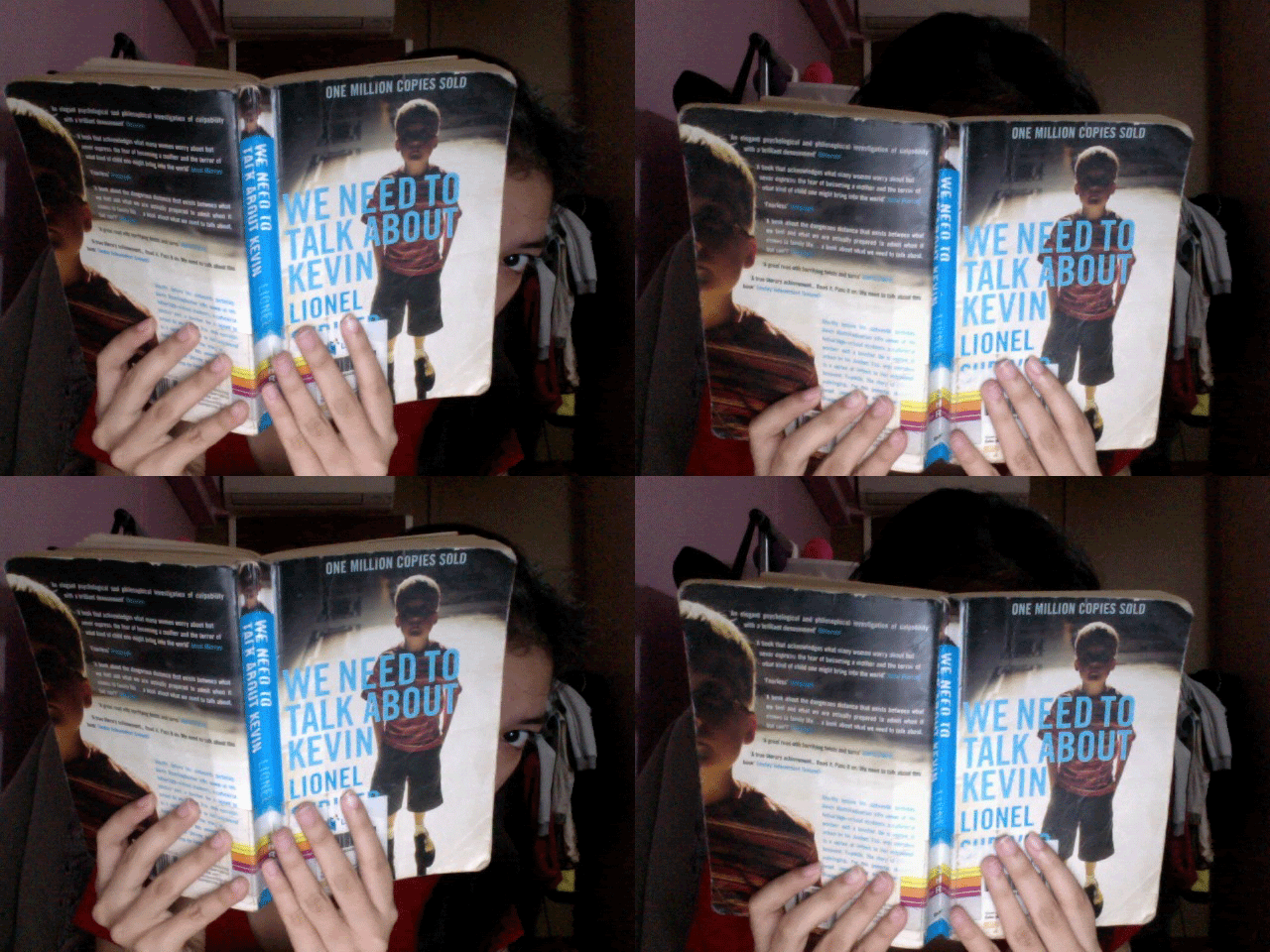
decided to check out this book after looking up the orange prize shortlist and saw that shriver's we need to talk about kevin didn't come out a winner
compared to we need to talk about kevin... on beauty involves less 'navel gazing' and lets the story guide itself. also despite the story's setting on cultural and academic environment, it sounds much less academic to me b/c the amount of drama surrounding the academic circle overshadows everything else. but it also seems deliberate to me that zadie smith wants this to be read more by people with interests rather than a learned cognition in cultural and academic sides and how us democratic system has allowed education to benefit those who are unfamiliar with academics and how the characters try to retain, fight, or extinguish it.
i liked both almost equally, narrative style-wise; in kevin the thought processes are really what make up the story more than the occurrences themselves, i think... that is why the film adaptation tried to strip bare all the elements and is considered experimental because not much is finally left to be said (not like much is needed, anyway).
also race as a topic is definitely prevalent throughout the book...one of the main themes if not really is the primary one (i think it's not really though). the protagonist siblings are of mixed descent--their father a white professor (howard), their mom a black housewife (kiki). the mom's genes are prevalent in all the children's skin tone, causing confusion and fascination to strangers, and it is the book's job to lay on the ground how each of them deal with their atypicality. Levi, for example, the youngest, seems to be trying to assure himself of his identity--that he is a whole black man, and hence expends effort on succumbing to the stereotypes of a black man: uneducated and 'street'
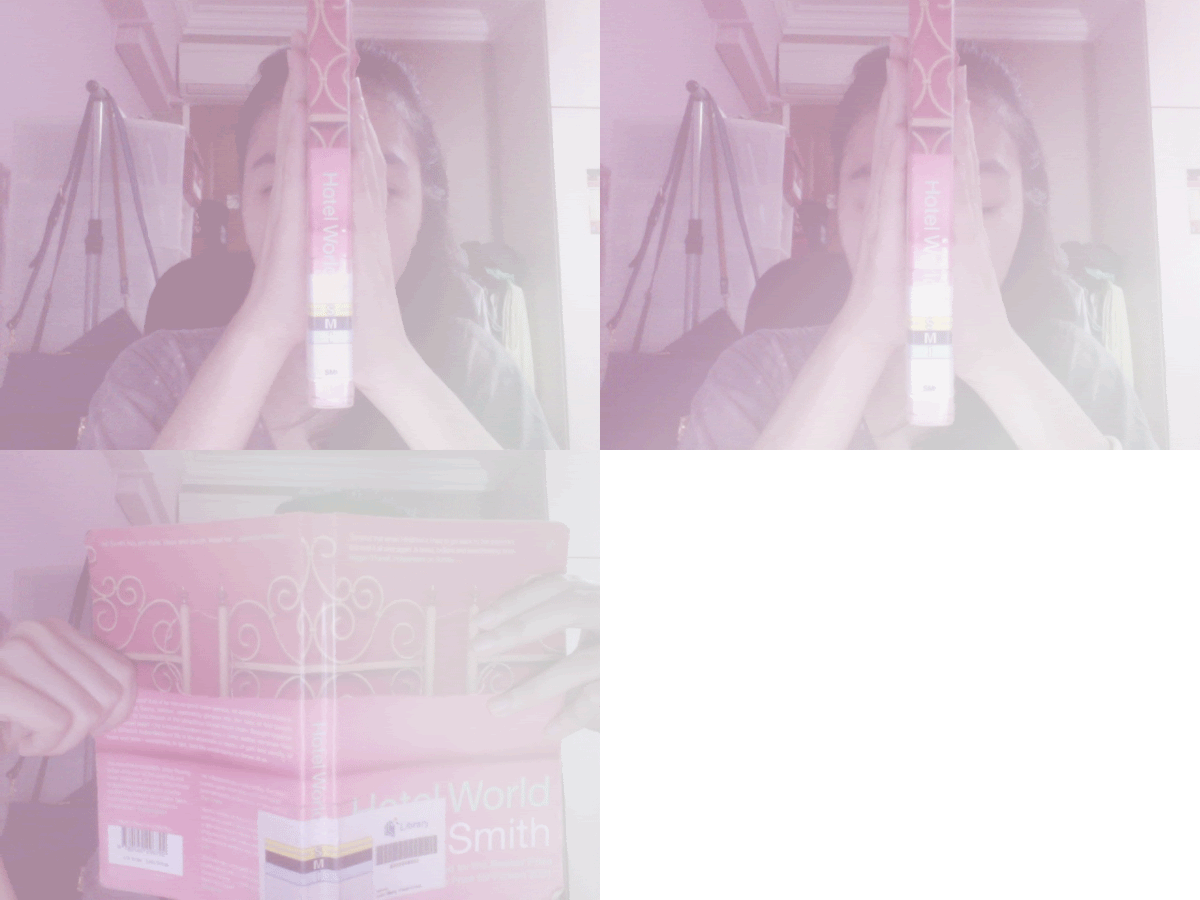
this book has a bad cover whenever i read it on trains i would be conscious of holding it and of people who might be thinking 'jesus that girl is reading dorothy koomson/jodi picoult/kinsella'. i mean it is not a badass book that would be a total opposite of the books written by the aforementioned authors but the cover is visually horrid and doing the content a subjective disservice. similar disaster happened to a certain version of eugenides' the virgin suicides, i failed to comprehend why they thought it would be a good idea to attract readers who would be drawn to such cover
this is my first ali smith book and i shall say her voice is one that i could understand with partial comprehension and full appreciation. the novel consists of five different parts stitched together--not something entirely new but it is done better than the majority of similar works out there. each part has its own specific style, that of course is still similar to one another, but independently distinctive (ie can stand as a piece of work on its own)
i thought the first two paragraphs were the lyrics to blur's song whose title i now can't remember and i tried to sing to it and found it very odd (it was not a song)
the first part tells of the tale of sara wilby who just dies from falling. we are guided by the equally clueless wilby and learn the rough outline of what befalls her, meet her family members, and follow her spiritual self to meet her physical self. i really liked the part where sara forgot some words and tried to describe them instead, and an empty space was left for the intended word--reserved. it denotes the importance of having such a practical shortcut that is of having a single word for something, albeit being arbitrary. also i was wondering will this thing happen when i die
had been having a vague desire to read an alain de botton's book for long because my friends whose opinions i appreciate a little above average retweeted a lot of his tweets, which subsequently prompted me to check out his twitter account as well, and found quite a lot of good thoughts that do not sound like overt, out-there wisdom a la paulo coelho's which not everyone would find applicable anyway; and so decided to follow him but was disappointed because he tweeted very rarely and often in times where i was not in my 'awakening' state
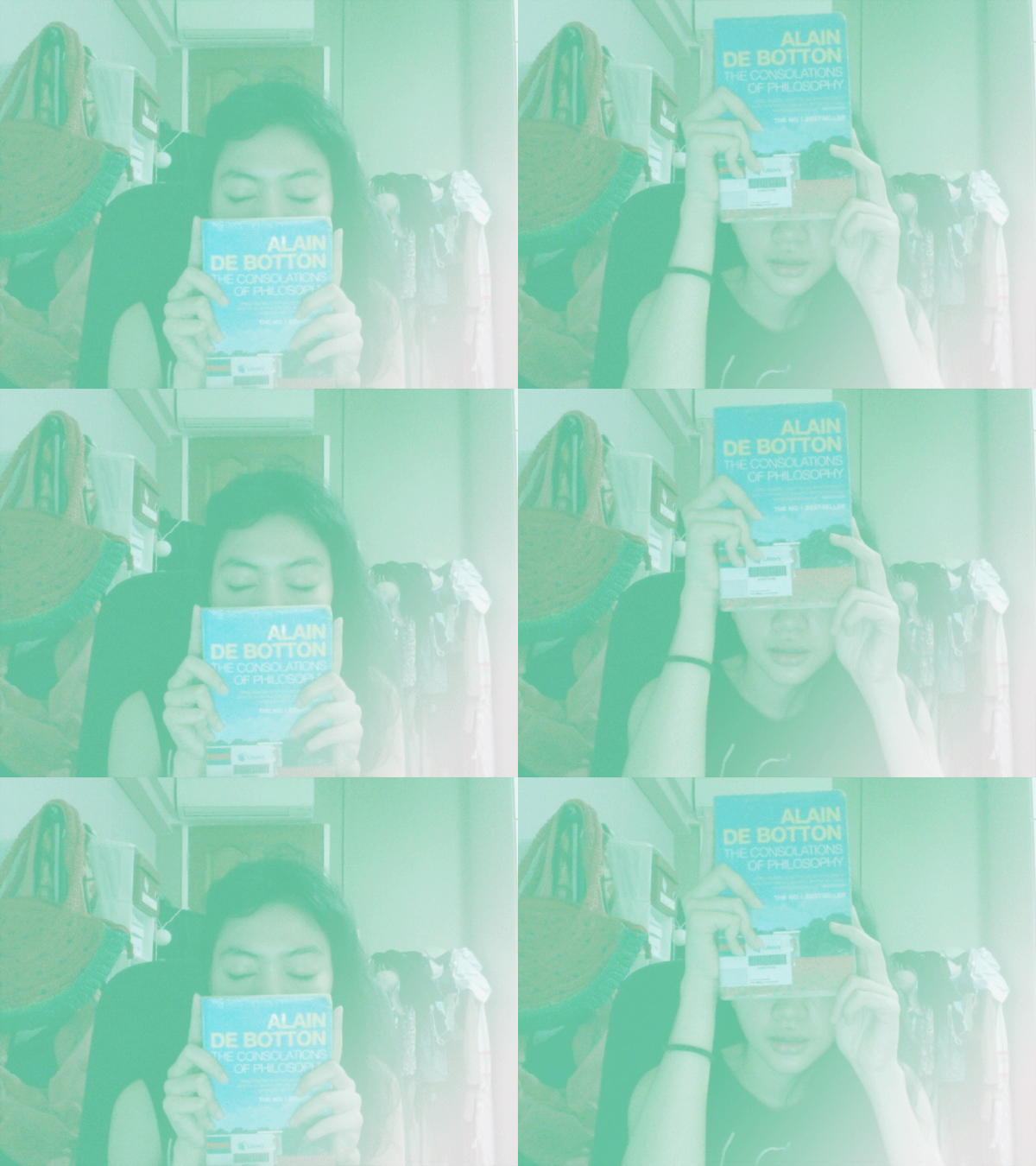
i initially thought i would pick 'architecture of happiness' because the title had that special ring but when i searched on library catalogue it said it was placed in the 'home & architecture section'; i thought 'wow this library is taking the title way too literally' but it was me who took the title too figuratively because indeed the book was about design and houses, which i no longer had interest in. i put back the book on the shelf and picked consolation of philosophy because i did not know much about philosophy and consolation that comes from books is sometimes more reliable, it has the quality of being human but not overly/obnoxiously too human because you see, when you offer consolation to another human it is difficult to provide one that is well-thought, no matter how much you desire to sympathize, whereas a book that is written by a human being expends more time in the process because of whatever kind of drive that gives birth to the book itself, so it is not just more well-organized, but also logical in a way that yeah it is possible nobody has told me this before, i need to know this/take this into consideration
the cover is a little bit 'icky' ie rose/tulip garden stretched across the landscape (although like most book covers, it is actually a 'portrait') with trees and sky as a backdrop perhaps to invoke 'serene' atmosphere that author/cover designer wanted to associate philosophy with
the book is good for general and historical knowledge but the thing with historical knowledge is that some people (i) tend to forget it over time and hence learn very little from it. the examples are often difficult to relate with in modern times too, for example epicurius says he obtains happiness with his own garden at the backyard because he depends very little on external influence. no it is nearly impossible if not at least laughable in singapore, although it may seem like a prerequisite for an 'ideal living' to some people (maybe a garden at the rooftop will be a good idea, go green you big cities)
the consolations of philosophy is peppered with a lot of pictures, ancient paintings, or mediocre pictures of houses or gardens swimming amidst the words to illustrate what the philosopher is talking about (although maybe different kinds of houses and gardens at their time, the book shows only those of 'our time') some of which i find quite helpful but the rest only elongates the list of references at the end of the book
what i find amusing about things from past (past here means, at least a few decades ago) in books/movies/media is how the records seem to glorify it, like most innovations have already occurred and there is no place for modern figures. sure steve jobs is a legend but you will not see him in such books. yet
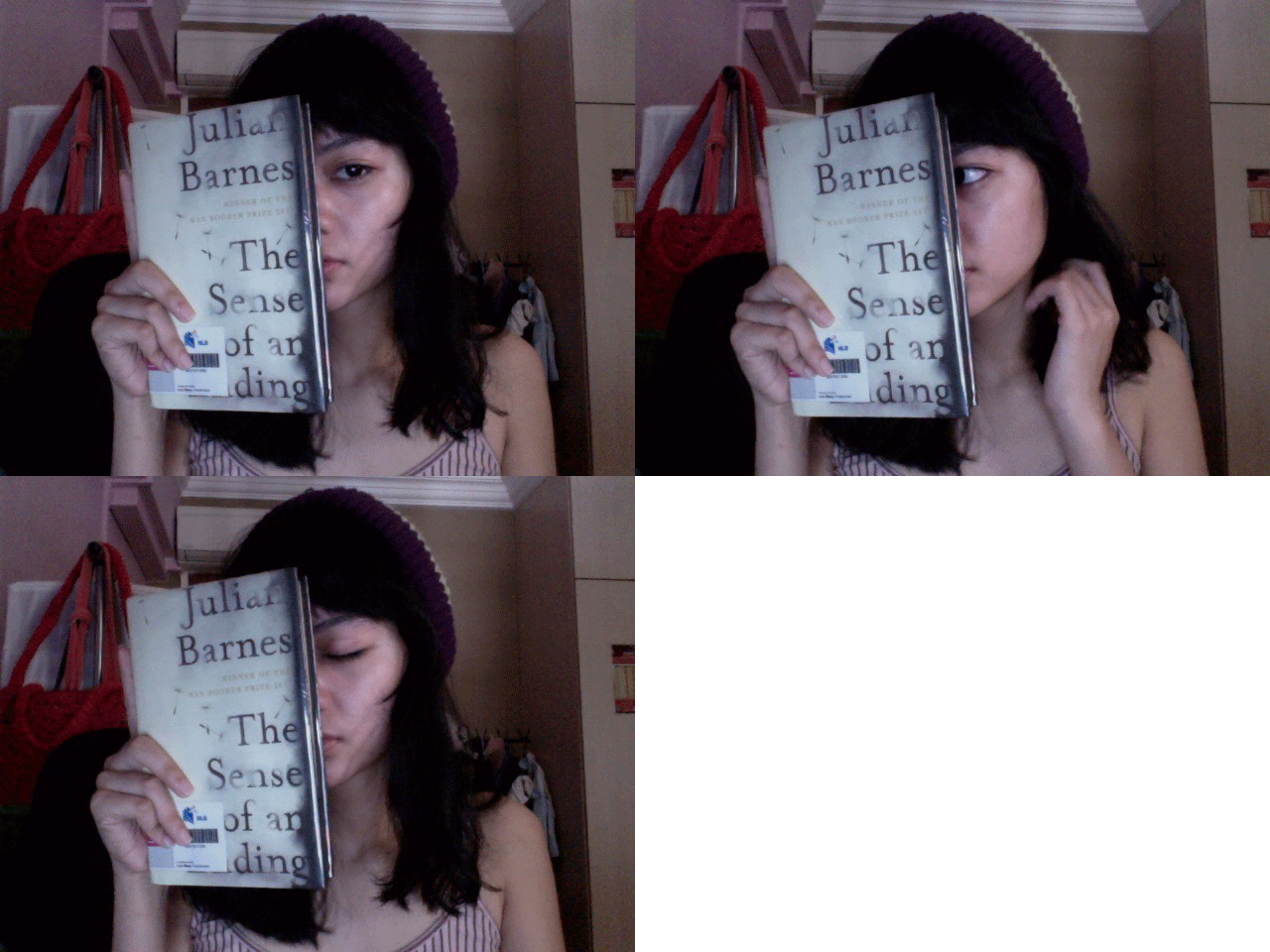
it has been long since i finished a book in one sitting, last time it was martin page's how i became stupid
first impression drawn from the first few paragraphs: this book resonates rather clearly with dcfc's lyrics
"it stung like a violent wind that our memories depend on the faulty camera in our minds"
and this impression stayed until the very ending, this was what the book premise is primarily based on, the kind of issue--passage of time-- that to me, has never become a bore
in general, i also like how most fantasies including the man character's, from his point of view, do not often morph into reality, maybe half-baked, in a predictable way that does not really disappoint, that is to have a life not dictated by novel standards, or those imposed by tv/movies; wasting life passing 'ripe years' with limited pool of close persons (when supposedly, according to novels/movies to be spent with as many people as possible) but does not feel like time wasted at all later, maybe immediately but not in the long run, generally i also like the idea of having such closeness reserved
the book's narrator, and main protagonist/antagonist (he seems 'neutral' to me) is tom webster. the story however mostly circles adrian's life, his friend who is superior in wisdom, knowledge, logic, and manners. adrian seems like that necessarily almost perfect character whose most human traits are unknowable/unbelievably mundane, even lower than mundane, if what tom predicts of his behaviors in the later part of the book is to be taken into account
tom really relies the narratives on the 'faulty camera in his minds', idk how to really take this, in a way this is very true that our memories are really prone to false recalls but he is reminding us of his lackluster, inferior subjectivity way too often and i think barnes might have used this approach to 'play safe', or to take the 'open to any interpretation' concept to another level, author is not responsible for any explanation of any version of the past. but the idea is the realities constructed by webster a second earlier could shatter via appearances of evidence and physical remnants from the past (all the more reason to write for the sake of writing, as often as possible)
i backlogged a lot of reading and writing
there are three books that i have finished and have not written anything about despite my mounting interests/thoughts on them
this is to kickstart it all
i did not know why i had expected so much out of this book
perhaps because i glimpsed at several quotes from of the author's other books and liked them
perhaps it was the author's very name that intrigued me
perhaps it was the pretty shade of the book cover
(i do not have much luck with japanese authors including this but i am going to try natsume sasuki maybe, in future
feel 'ok' toward murakami's works, not going to read 1q84, would rather read orwell's 1984)
two unrelated 'stories' comprise kitchen. the first one, titled the same as the book title, talks about deaths that surround a person and how she takes them in
she meets another man who is only related to her in two ways: he used to work for her late grandmother and like her, deaths are surrounding him too
it is not a matter of how many deaths are coming in tangent with the characters' lives, or how many deaths it takes for each to break down, in hot shower, in the lonesome sofa; but how the pang of the late people's significance starts to dawn on these characters and how they embrace the craters caused by deaths, the holes and the gaps, the realization that they are not obliged to have those gaps filled in, and that 'life goes on' and there are other people they share the planet with and it takes varied amount of time for each person.
As we decided where to meet, I looked up at the window. The sky outside was a dull gray. Waves of clouds were being pushed around by the wind with amazing force. In this world there is no place for sadness. No place; not one.
another book post that seems like it should appropriately contain the sentence 'i really like this book' (and best way to do it perhaps, is by kickstarting the post itself with the sentence)
recently i read a lot of books that i think are 'nice', this word i am using now is in the context devoid of short prate, or as jack pointed out later, nice as in 'real nice' and not part of 'manners'. i mean the word 'nice' in its whole sense because of a lot of things.
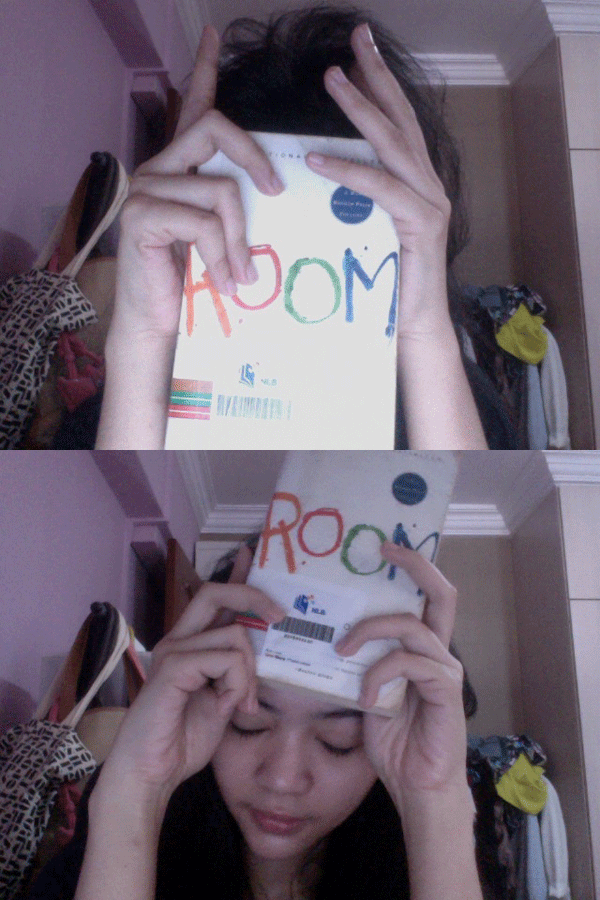
lately i think i like these books in very different ways--i like franzen's freedom immensely because i think it is very real, it reflects a dangerous possibility, whereas i like emma donoghue's room because it is offering a slice of what 'could happen', or a slight possibility that could happen to other people, near zero chance of happening to me just like death always approaches other people first before people you know and finally yourself. room to me is eye-opening because i have not had such experience and might not be able to have it, ever, for the good of me hopefully, whereas for freedom i think the possibility is rocketing to almost a 50:50 ratio (scary, dangerous, fingers crossed)
a flux of praises stream down the first few pages of this book and to my tad remorse room has to be compared with the lovely bones which i do not really enjoy
i think putting it side by side with 'the curious incident of the dog in the night-time' would be more sensical, although the basic premise and everything else differ, but the filters used to percolate the narratives feel somewhat similar, and so do the excellencies as final results. the curious is narrated by christopher, a 15yo genius with asperger's, while room is narrated by jack, who although does not possess any autism syndrome, is always 'inside' he has become an 'outsider' to the 'outside world', and hence, is different
room is about a mother and a 5yo son named jack, living in a confined space called Room with capital 'R' for five years. in Room they seem to have everything, room is the world to both of them. at night Jack will be put inside Wardrobe and 'old nick' will come into Room and bring in their needs from Outside. for sunday jack will have special sundaytreat that is any source of amusement he wishes to have. when waking up jack will 'have some' ie he will be breastfed by his mother. in the daylight jack and his Ma will eat and play games and learn. the games he is playing with his mom are very 'stimulating', especially considering the limitations of their situation. for example 'parrot' in which jack will be parroting news anchor or anyone on TV, repeating their speech word by word and afterward will question words that he does not know. after eating jack thanks baby jesus and to him the faces of the sun and the moon are the face of God, which infiltrates through the clear skylight installed in the 11 by 11 Room. to Jack, everything in the Room is real, and everything else he watches in TV is TV (the opposite of real), even the other human beings. he sometimes thinks old nick is part real and part TV.
the history of their existence in Room will unravel when almost reaching the half part of the book, watching it was a great thrill
from this part this post will reek of spoilers so stay away if you do not wish to read them (thank you for coming this far)
this is the book everyone is reading now
and i like it very much
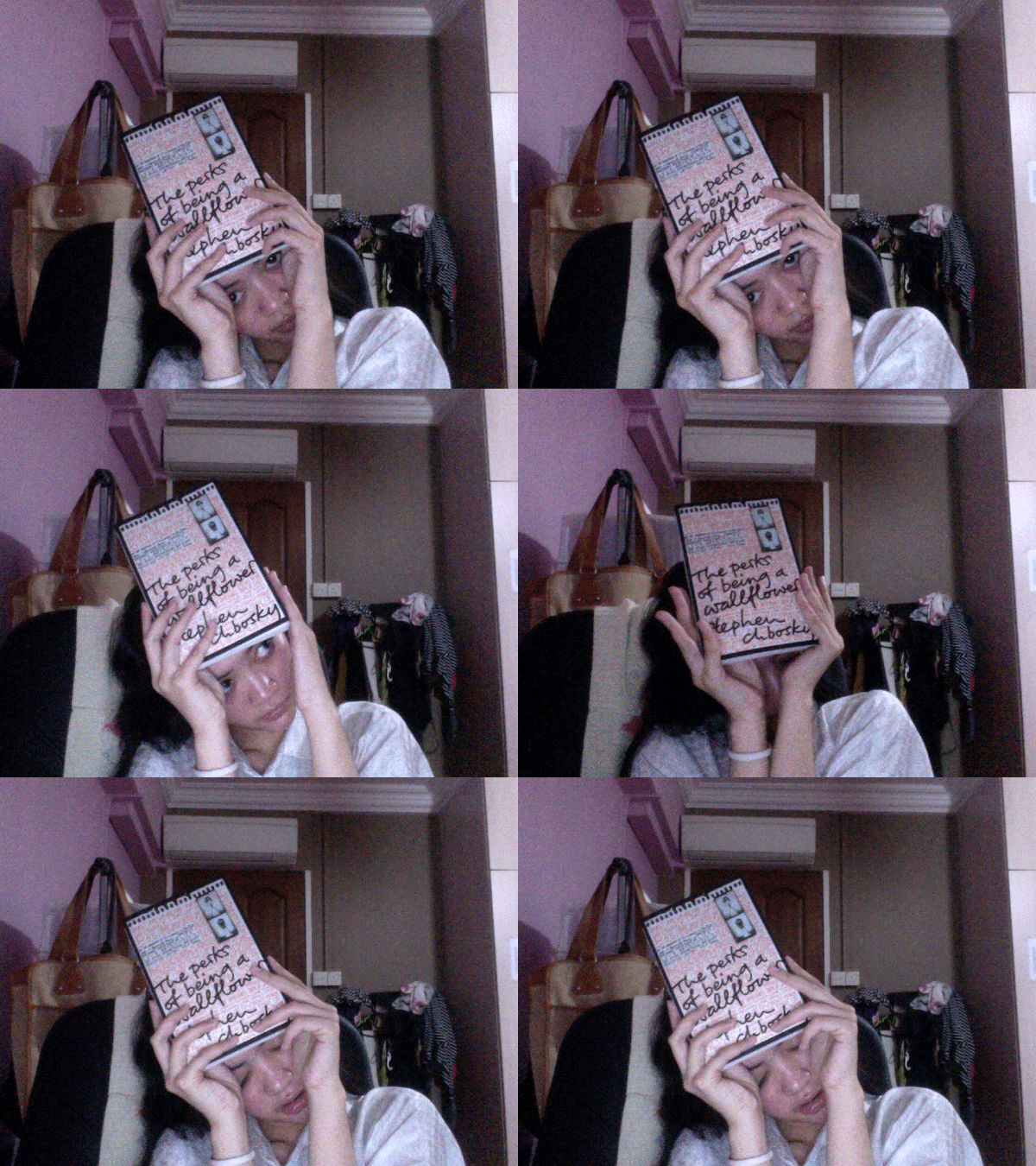
the perks of being a wallflower by stephen chbosky
i like it firstly because of the language, distinctly simple but not in catcher in the rye distinctly rebellious kind of way, or exaggeratedly studded with run-on sentences in the curious accident of the dog at the night time kind of way. it is really not trying to be poetic, or insurgent, or aloof, or romantic. it doesn't try to be anything, and that is exactly why i think it is great. of course the previous two books have been of a tremendous enjoyment to me as well and i cannot point my finger at them for their entertaining hyperbole considering the contexts the characters are surrounded by (e.g asperger syndrome in curious incident); but i guess perks just reinvents the whole high school mess drama. i felt like it was really an extremely honest account, moderate but never in the slight manner boring, just well-conveyed. when a high school tales like this surface i usually turn skeptical at their offering other than to reveal the dark side of teenage years some people might long to reminisce (and hence, making them instant hit) but perks definitely offers more than that.
re: language, i think this thought somehow intersects with my boyfriend's and i showed it to him and he nodded and resumed his reading:
First of all, Bill gave me a C on my To Kill a Mockingbird essay because he said that I run my sentences together. I am trying now to practice not to do that. He also said that I should use the vocabulary words that I learn in class like "corpulent" and "jaundice." I would use them here, but I really don't think they are appropriate in this format.
To tell you the truth, I don't know where they are appropriate to use. I'm not saying that you shouldn't know them. You should absolutely. But I just have never heard anyone use the words "corpulent" and "jaundice" ever in my life. That includes teachers. So, what's the point of using words nobody else knows or can say comfortably? I just don't understand that.
re: perspective regarding extremities, my politics lecturer once mentioned that tv is trying to portray the extremes very much because they qualify as news. it is of course an inaccurate image of the reality because of the rule of large number: certain kinds of distribution, at any point of time, at any place, always resemble a normal curve. for example, the curve of 'number of rebellious acts done by high schooler'. a lot of people have it in the middle but the media are trying to show the shocking figures that come from a handful of extreme cases. the perks tells a story of those in the middle. i think it is necessary to have things like this for a while because no matter how great works based on extreme cases are it is good to draw close proximity with the truth. it keeps you sane and it prevents your perspectives from getting too skewed.
i finished part 2-4 today and if it's not not boring i don't know what is not
the book consists of a series of letters dedicated to an anonymous friend, and in those the protagonist pours out all his emotions, his fits, and his accounts of the days. and certainly not in the bad way. like when he passes out he simply says that he passes out. this felt like a luxury to me because had it been written in third person i believe the event of his passing out would have been exaggerated to illustrate the serious extent of it and i would have dreaded my way through the long-winded depiction. i mean i like vivid descriptions but his letters are just refreshing. his belittling his suffering only does a reversed effect on me--it makes me think he's got something greater than mere emotional problems he barely mentions.
our protagonist charlie (i don't think that is his real name, neither do i think other characters' are, referring to charlie's first letter) is a brilliant kid, initially awkward during social circumstances (even in school); but makes his way to meet new friends. he likes to read and i like most of the books he reads too. he likes making mixtapes which i also like to do.
a lot of things he says make sense to me and here is one of my favorite quotes off the book
I think that if I ever have kids, and they are upset, I won’t tell them that people are starving in China or anything like that because it wouldn’t change the fact that they were upset. And even if somebody else has it much worse, that doesn’t really change the fact that you have what you have. Good and bad. Maybe it’s good to put things in perspective, but sometimes, I think that the only perspective is to really be there. Like Sam said. Because it’s okay to feel things. And be who you are about them.
i might be still telling them about china and africa but the point is it is okay to not feel okay sometimes, which should not be interpreted as a license to dwell on the bad days but just to let them pass readily
i have good feelings about a certain kind of deadpan writings. this is one of them. the protagonist's emotionless nature reinforces the effect on me; there is logic in everything. just because he can't feel what most feel, does it make him malign?
i love how the book ends too, it reminds me of brave new world's ending.
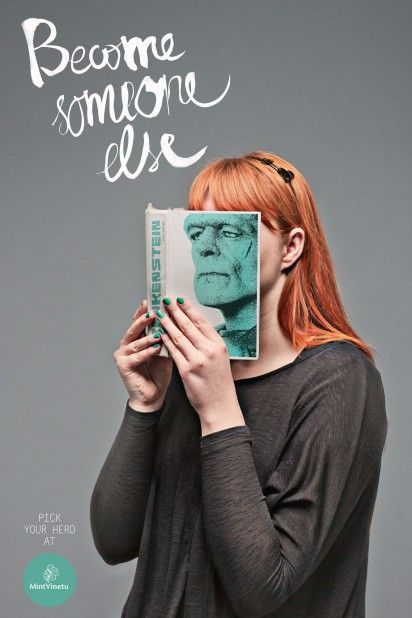
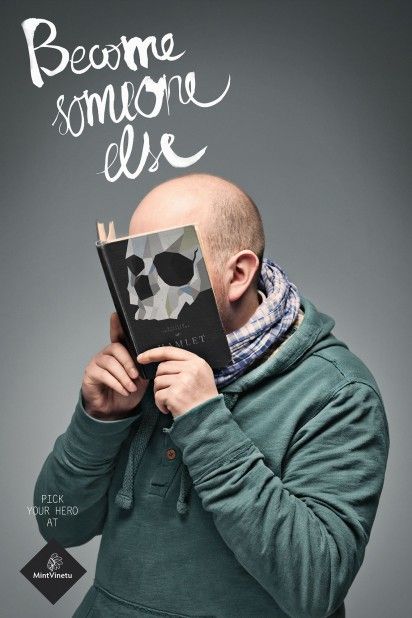
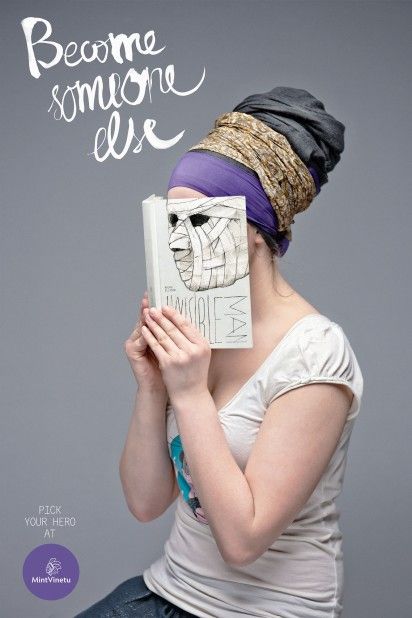
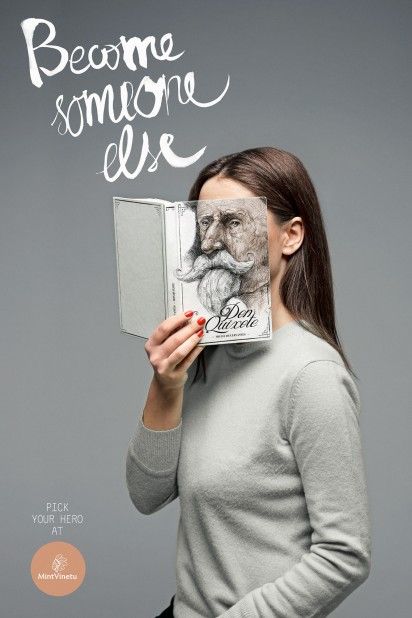
i cannot count how many times i have tried this without being able to work my way around the destined failure which ensues--using books, vinyl covers, brochures, you name it. but what makes this series great is not just the neat execution but also the message embedded to it.
When one reads books, he/she starts living it and identifies (or not) with main hero. Exactly, right? It seems like a nice kind of selective social learning.
Hi, so, this book is great, OK? I'm not trying to impose my brief evaluation upon you, or saying that all other books are shit, but let's agree to it, this book is just a straight standout.
(a piteous attempt at mimicking Patty, sometimes my favorite character, sometimes a heroine, sometimes a plain douchebaguette, but mostly an epitome of modern feminine figure engulfed in a pensive, overwhelmingly astral dream of carte blanche.)
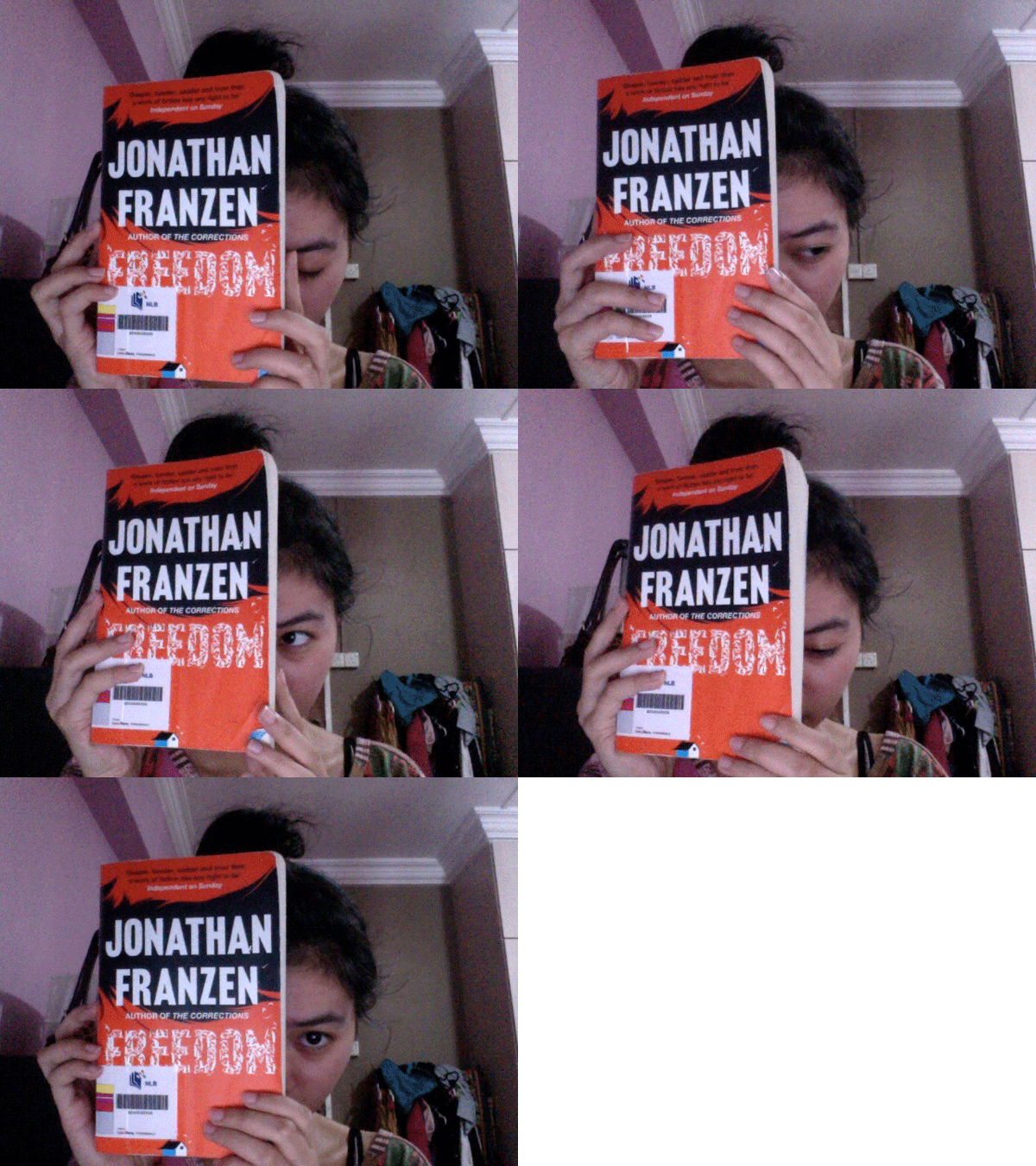
I don't know if this book is meant to make me feel sentimental or depressed or sullen or cynical, or all of them intermittently, or all at the same time; or also elated and delirious some other time.
I think freedom probes every facet of human emotions possible, attempting to find out how much pounding required for his/her emotional walls to splinter and pulverize into fine particles (maybe crystalized into tears, maybe a stern look via conscious effort of holding back, maybe a familiar pang, maybe a distant wistful gazing, a longing, etc--it clearly differs from one to another.) (Please help me bolster this list, should you feel a certain kind of other emotions upon reading it.)
There was a particular time when I felt the need to pin down my sentiments immediately, it was on June 11, 15:23 GMT +8:
Freedom by Jonathan Franzen is extraordinarily good. Now starting on Chapter 3.
It feels like reading a less experimental, elongated version of Lydia Davis essay (edit: I now feel they only intersect at some of the topics they are highlighting, i.e life, marriage, futility, curiosity) but with more twists (whereas Davis' seems to focus on aiming at the truths slowly. No rumbles of 'surprise surprise'.)
The scenario laid out in the book is of course not very ordinary (this is an opinion according to my unfledged age, which correlates with my lack of myriad experience), and yet it succeeds at belittling the distance between the readers' story and the characters' story. Sort of, speaking nicely of its latent message: 'My story MIGHT be your story. It even might have been; so listen.'
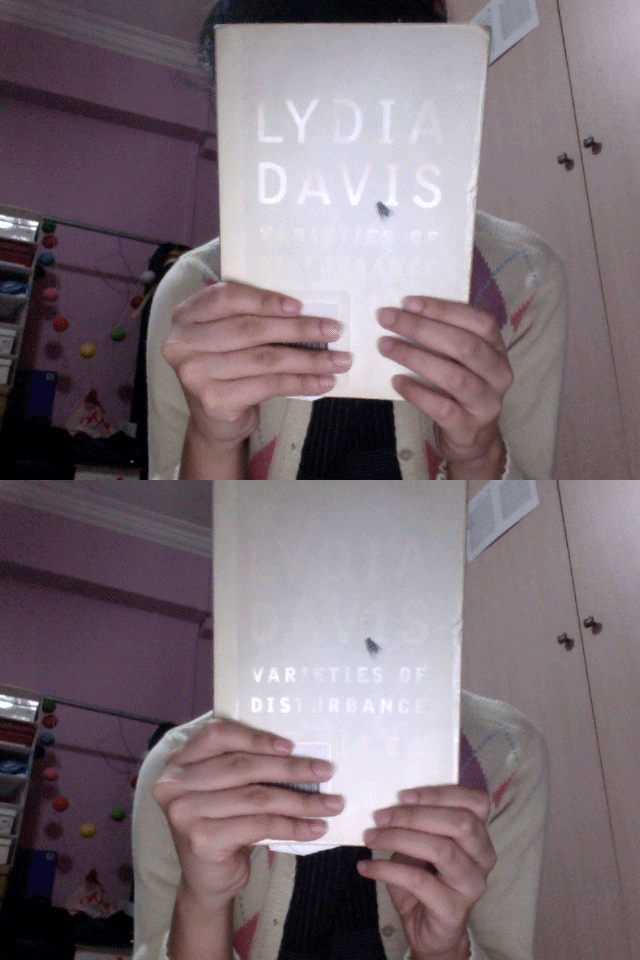
finished reading lydia davis' varieties of disturbance two days ago, really really like it
i don't read many collections of short stories though (interested in reading gaiman's stories: all new tales a year ago)
i think you don't read such book and say that some stories are good, some are bad (although i do have favorites). you read the book as a whole. i mean, we drag through some parts of other books too; there will be inevitably bits that we really enjoy and others that put us to sleep quite effectively. i guess 'some are good and some are bad' is too general a description
it is more evident here in varieties of disturbance. lydia davis' voice is very distinct it floats among other sorts of writing, it's that lovely depth which is achieved through 'deadpan phrases'. that's among other things that make her collection of stories here seem very coherent. i think i like it also because they're not really stories, they are truths. they don't feel like fiction at all. they are what's going on inside the charaters' heads, what happens outside the characters' physiques, and the rest are truths. no surprise and not much twist. they are familiar. they don't try to be anything else; they are presented as what they are and what they have been. for instance, her analyses are written in a perfect format of a standard analysis but such a good eye for detail is what sets them apart; her observation of her fictional characters are very commendable. they wake you up with a gentle pinch of clarity
she mostly writes about modern mothers, children (and mostly toddlers), older bunch of people, mothers, deaths, and household life from various angles
finished island, 'finally'-worthy moment, partially
felt guilty because i dragged through the middle part (on religious ceremony) & a friend's boyfriend asked how was the book when i was up to that part and i answered hastily, it was very bad don't read it
but i turned out to like it in the end
not very fond of the style of the language, could be really dry; but perhaps that was one of the reasons why my liking seemed to be earnestly different from my liking toward other books, it was really the content that vacuumed my thoughts in
it tells the story of will farnaby who is shipwrecked in pala, an island nation that is out of the world's reach, always covert with minimum contact with the rest of the world
curtain was closed with a sad ending, i skipped the last part where will encountered a moksha-medicine experience for the first time, skipped it because it seemed impossible to visualize when you haven't:
a) done hard drugs
b) received pure/legitimate kind of enlightenment
approximately twenty pages of an exhaustive attempt to write down things comprising an experience that in nature isn't meant to be written down (can this be linked to the strong oral culture in the ancient pre-asoka indian society), some parts glazed over with uncanny precision to emphasize/draw attention to mundanities, maybe in order to 'appreciate it' or to 'look at it from a fresh perspective', but i found myself half-laughing/smiling at "he was looking, will suddenly perceived, at a small square table, and beyond the table at a rocking chair, and beyond the rocking chair at a blank wall of whitewashed plaster....how was it possible that things so familiar and commonplace could be this(in italic, obviously)? obviously it wasn't possible; and yet there it was, there it was."
boyfriend seemed 'mildly' mad at me for pointing out the futility of a utopia portrayed in this book, i said it can't exist it's too late, because for a nation like pala to exist firstly it requires an untouched territory which nowadays can only be found in an undeveloped country, and this country must learn to let go of the plastic dreams of industrialization and choose an unfavorable route that is unyieldingly more difficult to tread on. this nation then will need to skip the 'industrialization' phase to a scientifically advanced phase where it can make good use of its resources without overexploiting them, both human and natural resources
i think i said rather loudly 'obviously this cannot happen', and he clearly detected a coarse undertone slipping through my one-way speech, damn stella artois. just thought there's no potential leader who can handle this task, or maybe i'm too harsh to believe in such an ideal
or i might happen to be just jealous of pala. there freedom is revered, but not that kind of freedom in america where everyone is practically subjected to mass consumption (i'm just reiterating what's been said on the book, not speaking of personal opinion). the education system is tailored to every person's physique, nature, etc since primary school; psychedelic drug is part of the curriculum; mutual adoption club doors open to children who feel threatened by a slight at home; birth control and 'yoga of love' ie sex part of innate culture. and yet they don't bother with oil and tanks and wars and fast cars. what an enviable society. i want to life with these pacifists
this is my first huxley's book, brave new world shall be next
you might have heard of the movie adaptation, aptly given the same title, that has churned out some discussions from all kinds of people. you might wonder; okay, another psychotic demon kid kills his seven schoolmates, a teacher, and a cafeteria worker. big deal. isn't it an outdated premise already?
when i first read the book that's what was in my mind too. the book is narrated by kevin's mother, eva, in a series of letters to his husband—or ex-husband, for the sake of sticking with precision. but after flipping a few pages i felt like maybe there was something else. a few miles down the road, maybe that was all. not like it had offered me nothing, it was good enough a ride anyway. but it was right at that moment when shriver presented me with a final horror, a somehow very appropriate one, that couldn't make me appreciate the book more. it was that good. it got a little vexing in the middle; enticing some silent goddamit-eva-get-over-it shoutings from the readers, i believed, but. i was made understood a little by the time i reached the final page. that all the navel-gazings and blank stares hiding thoughts buried deep beneath, mean a lot of things.
eva is a kind of mother i might want to have (not that i try to express any dislike instead of delights toward my own mother here) or to be. maybe not really, because look what monster she's bred. she doesn't like kevin, and for sure i want to be liked by my own mother. even since all i do is shriek and feed on milk and shriek. but eva has some qualities that i like, also she frequently conjures up some ideas and thoughts that i also like. what drives people to have children in the first place? merely the temptation to inherit the mundane tradition? and these are my favorite thoughts of hers:
this book is short stories and novel at the same time, which i really like. the cover is quite a pain in the ass though. really. GOOD BOOKS WITH BAD COVERS ARE A GLOBAL ISSUE. one could simply dismiss this precious read at the corner of bookshelf whose surface is a free landing for any kind of dust just because of its appearance (+horrible typeface) that resembles that of a chicklit; but fortunately it won't happen because the book has gained recognition ever since it was shortlisted for the orange prize for fiction 2006. hence unless you've got a bundle of luck you'll always find this book missing from library shelves
i don't read a lot of 'award-material' books but i like this book
in this book it seems like a lot of voices are talking to you, one wave after another, and yet the narrative doesn't let them overwhelm you. among the voices are leopold gursky's, an old writer whose book according to his own awareness has not been read by more than a handful that matter to him; zvi litvinoff's, leo's friend who has good intention but eventually sets it on fire; alma singer's, who tries to make his mommy happy after her dad's death; bird a.k.a emmanual chaim's, alma's brother who wants to make alma happy so that he can prove himself a lamed vovnik, and the voice of the book called the history of love itself, that strings all these people from different eras and tales together.
i feel like the book has a very balanced, careful sense of fantasy and reality. it's like foer's everything is illuminated but this is definitely easier to relate with because it is set in our time and is more about human relationships and less about magic, or shall i say it's more about the magic in human interpersonal and intrapersonal relationships. i like how leopold gursky often drifts off to his past; which is often left hanging there, vivid yet distant in quality, which in his cases is enough i.e i don't demand any explanation to any of his recounts, i don't wonder whether it really happens/not, they just seem pure. he's also an agreeable character as well, despite his messiness and often lack of preparation measures and courage, exerts sincerity and love throughout his life. maybe he dwells too long in his past but this impression sometimes never dawns on me because everything written seems very true and genuine (proven that in the end he never loves any other woman). yet he still keeps going on with what he has. when i am old i think i want to be a little like leo gursky, who seems to possess that bright, envy-worthy vigor of an indeterminate age
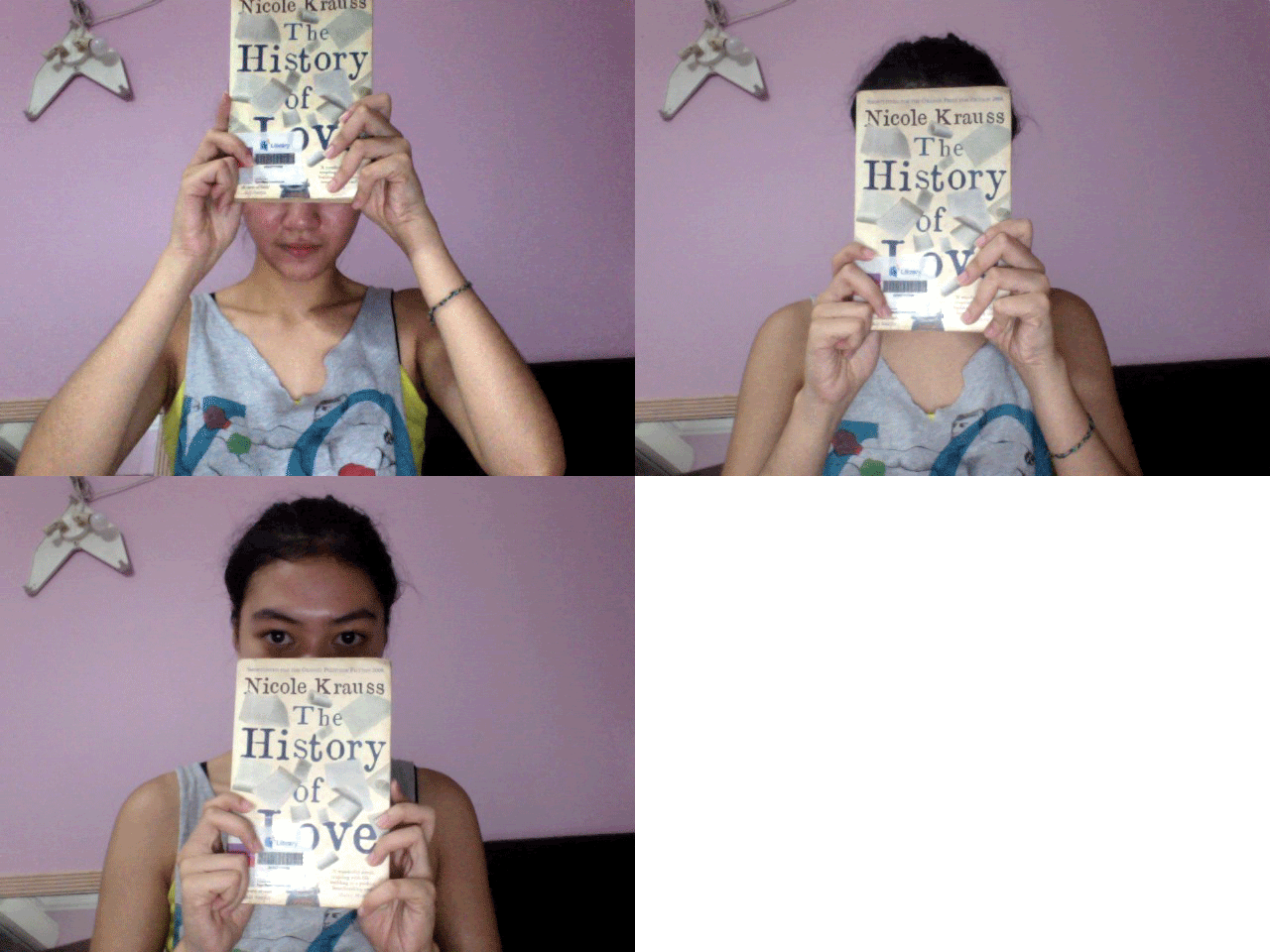
the book history of love is basically about the book called the history of love. the featured book is very beautiful, i like its analogies and the way the sentences there have certain rings to them. in fact, ALMOST every page of the book (the history of love written by nicole krauss not by a character in her book) has a specifically celestial touch to it, i feel like by the end i have invested well in all the narratives and the characters.
here i am going to quote the first chapter of the book also titled the history of love written by our main character
Today I've made a major decision: I am never going to die.
Others will die around me. They will be nullified. Nothing of their personality will remain. The light switch will be turned off. Their lives, their entirety, will be marked by glossy marble head-stones bearing false summations ("her star shone brightly," "never to be forgotten,""he liked jazz"), and then these too will be lost in a coastal flood or get hacked to pieces by some genetically modified future-turkey.
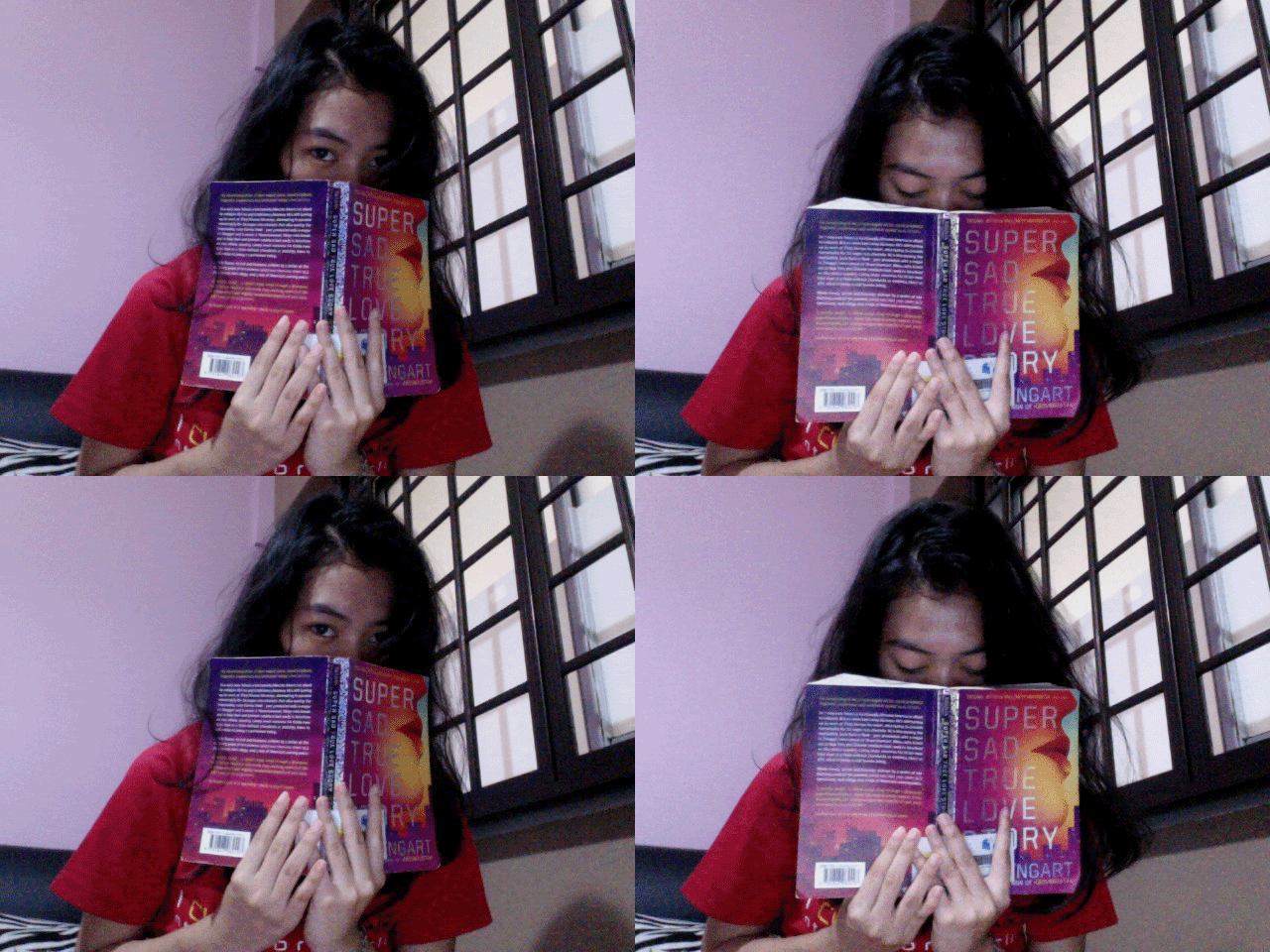
a.k.a how gary shteyngart's portrayal of future, fast-forwarded to an indefinite year ahead of us—perhaps no more pinpointed by number—first commences from the book's most ancient, most civilized, and most humane protagonist's perspective.
i used to think that i might want to keep something like a diary, but in a letter format to show to my children in future. of how much has changed. of how much is still relevant, like for example (my prediction of) the generation gap that technology will still not be able to bridge over or resolve. i think this book would have done it.
the book is set in (near?-)future, but because this is not a science fiction, the absence of exact calendar year is dismissed permissibly. (although we all would love to have one so we can compare when we reach the said year OH C'MON we all do. just look at 2001:a space odyssey and alikes.) the first noticeable thing is that it is fun to watch our current big names in music, literature, culture, etc referenced as 'stuff that were once big in another lifetime'. how stardom will eventually deplete and the 'had my time' imaginary emblem will be bestowed upon the currently (according to our timeline not the book's) revered stars.
the narrative mainly alternates between the diary entries of lenny abramov—perhaps the last man in america who still literally pens down his thoughts—and globalteens (a future social media integrating e-mail and messenger chat exchanges) entries of eunice park, the love of lenny's life. contrast in their usages of language protrudes noticeably here, as if lenny and eunice are from completely separate eras.
the future reality is built upon a construct in such way that is believable, indistant, but still oozes with surprising and funny elements. for example girls in future are obsessed with onionskins jeans that are made of transparent materials to show off their shaved labias and behinds. also people rate each other's fuckability, personality, and sustainability—the world then seems like a giant prototype of the sims or other simulation games. i ROFLAARP (one of the book's fav expressions) while reading these bits.
lenny is the sole character that connects the book's reality with ours—he's the only one left who still treasures physical reading activity when the rest are 'scanning through the information' on their apparati (all-in-one electronic devices), online shopping, or streaming. it is mentioned in the book that the last physical library book has just been closed for good. discussed this over english breakfast skinny pizza, seems like a foreseeable idea via invasion of e-books, closing of a few giant bookstores in singapore. sad.
and here we have our lenny, a literate immigrant in his late thirties, an NYU graduate from moscow with degrees in english and business. going down to the most crucial information; lenny is a guy who has alarmingly low fuckability, less than average personality, and moderately high sustainability. and he is completely floored, knees on shaggy rug, by eunice park the tiny young fickle korean mind, whom he first meets in rome during his supposedly business trip.
lenny works for this post-human service that mainly aims to extend people's lives without any divine intervention, only via extremely 'healthy diet' topped off with shiny polish of some advanced technology. his task is to find high net worth individuals (your financial and even personal information are just a click away from curious peeks) who might be interested in the manifestation of the concept of eternity. in order to be qualified, viewed as deserving by the company of the highly personalized beatific treatment, one must not only possess a strong financial standing, but also several other qualities that are gauged via the conducted tests/surveys. this took my interest as i think, in the era where the idea of death still haunts every living human being, the ambrosial smell of eternity often tempts but challengingly requires wise handling which could be laborious from a lot of aspects. e.g, assuming now you can afford the treatment, can you sustain that given blessing when you have to bear the thoughts of or even eventually be outliving your children? or wife? or friends? etc…seems like one neglected area when eternity is offered as a luxury commodity, limited in quantity.
it is not like the research is all and thorough; it is still ongoing and hence we have joshie, lenny's boss, as their current object of experiment (not that it's a bad thing AT ALL, actually). he is under this impression that his aging process has now been reversed—living in his 70s but indulging in early 30s rigged vigor. his escape from death is not still a guaranteed success but at least his life expectancy is growing (hopefully) exponentially.
there are so much thoughts going on for this topic. what's the basis for human desire in living longer? where are the secret pollen grains? is it because some of us regard ourselves as more important than others so we become sure that our prolonged existence will give off benefits to our surrounding? or is it mere selfishness? is it the wanting, the curiosity to explore what's beyond a sole generation, to experience newness and oldness first-hand?
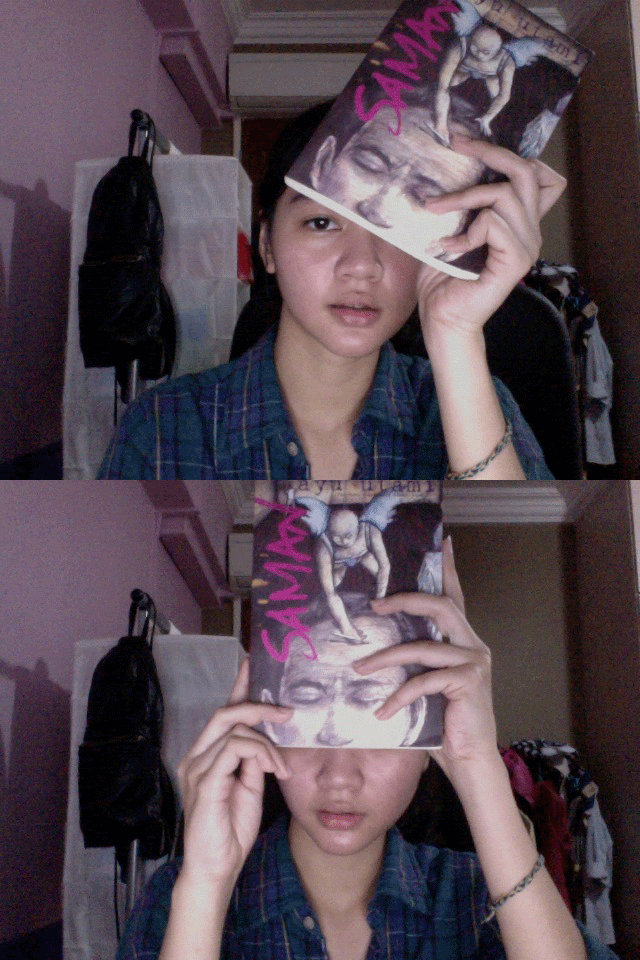
on my last visit to jakarta i had expressed my interest in picking one or two local reads and during this trip now the decision fell on Ayu Utami's saman. i vaguely remember reading the book either when the junior high school years were nearing the end or when i was still in my very first, freshly-ironed high school uniform. but my reading that i just finished yesterday did not feel like a re-reading at all; only very few (i must admit, too vulgar and too in-the-face for my standard back then) details brought a real sense of deja vu to my brain. unfitting, spoke the environment surrounding my fourteen or fifteen years old to some phrases and references in the book. in the name of anticipative clarification here i would like to further declare that it was not because of any forgettable phrases or unimpressive storyline. it's just that back then, perhaps, i was too young or way too illiterate for her book, although what i'd really like to do now is to talk to my teenage self, "great, at least you've tried" with a sincere pat on the shoulder, for introducing me to the all-consuming opulence and brilliance evenly spread on EVERY page...
saman shot up to my best 5 books quickly, even before i reached the middle part. the book to me felt partly distant partly near: devastating, futile, like most books that seized a good amount of space in my mind. amidst all the hopelessness and in the sea of desperate thoughts, everyone is stained in one way or another. that seemed to be what saman was trying to say. was it comforting? not really, because all the wrongdoings done in the book seemed very unsettling, like if you haven't experienced them in real life chances are, it's possible. saman opened the door to all unnerving possibilities that, like death, always seem to only happen to other people, not oneself. in such scenario finding a character who could secure an absolute protagonist role became difficult; i could not shelter my reading self under any of which. what could not be found was a character who could guarantee that everything is going to be okay. no one i could trust, although some might seem trustworthy in several parts. they have reasons, of course. promising personalities that would put one's well-being at stake for the sake of avoiding harm to others. but it is also good intentions that pave most ways to hell; not only are they inadequate, they—in one too many cases—ruin everything.
the book has often been deemed to be 'controversial' because of the sexual content but i myself am of opposite opinion, personally i think the work is important. saying that the beautiful prose manage to disguise the stark vulgarity behind them all would be a shortcut, but i would admit that in any book, the main topics will still be important and they have to be shown through various measures (in this book, sexuality, or women's and supposedly ingenuous man's view of sexuality through ayu's distinct phrases). but the writing did not overexpose or sensationally exhibit the vulgarity to address and explore the issue, they just popped up at unexpected times, which i always subsequently felt to be oddly appropriate. here ayu did not only talk about gray area, or saying that sex is a universal thing or whatsoever, she more or less showed how accidents happen and although coincidences are not supposed to be the main thread connecting those dots and leading to any sexual experience, they often open the opportunity and teach the characters many lessons.
the book was thick of various elements: history, fairytale, social values that merge into a smoothly threaded knit of self-constructed reality. but on a very personal level having re-read the book served as a concrete reminder of what has changed in me and in my surrounding inevitably.
i stopped my writing here. that was about all; there is actually a sequel to the book that i haven't finished
And I will have to cover my ears from the echoing 'really? really? really' that sweeps over all the rooms in the back of my mind.
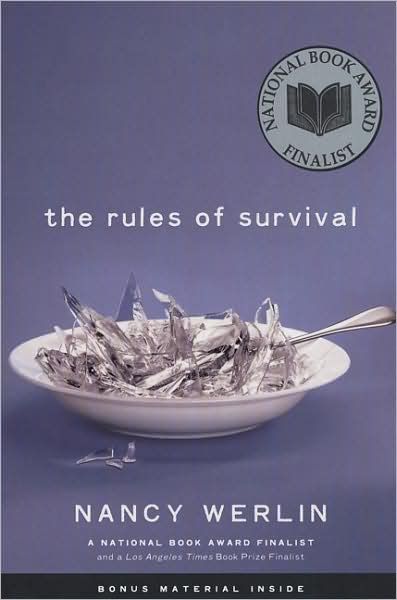
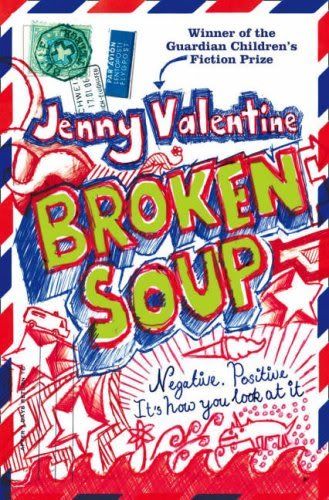
No, I mean, really. If you have no idea about a book, have never heard of it even once, the first thing you're gonna recognize about a book after or even together with its author is either the spine (if you're seeing it standing erected on a shelf) or the cover of the book (if you're seeing it at the topmost of a stack from above, or lying closed on the carpet, or clutched tightly by some stranger on the street, or referenced in various media). Not even the synopsis. No. You have no idea about the story at all. No premise. But you know something about the book. The cover. And subsequently a question: What is this cover trying to convey?
I have, during several occasions, picked books based on my curiosity to the previous question. Or simply just because the covers caught my eye instantly. Or any 'award' or 'finalist' emblems embedded on them. Not gonna lie. Especially during my secondary school days where I had very minimal references for good reads… (see the rules of survival and broken soup)
Now I do so less (anyone will as s/he begins to gather sources of book recommendations s/he is comfortable with), although I still take pleasure in having or reading books with good covers. Admittedly, if there are two versions of the book; I will definitely pick the one with the better cover. Simple logic? Not really, since we are bounded by the 'don't judge…' idiom. According to the idiom, if the contents are really the same, both books should have equal chances of being picked. But the truth is: of course no!
Here are my favorite covers of some books that i have read/tried to read/owned (some of them come in a few versions):
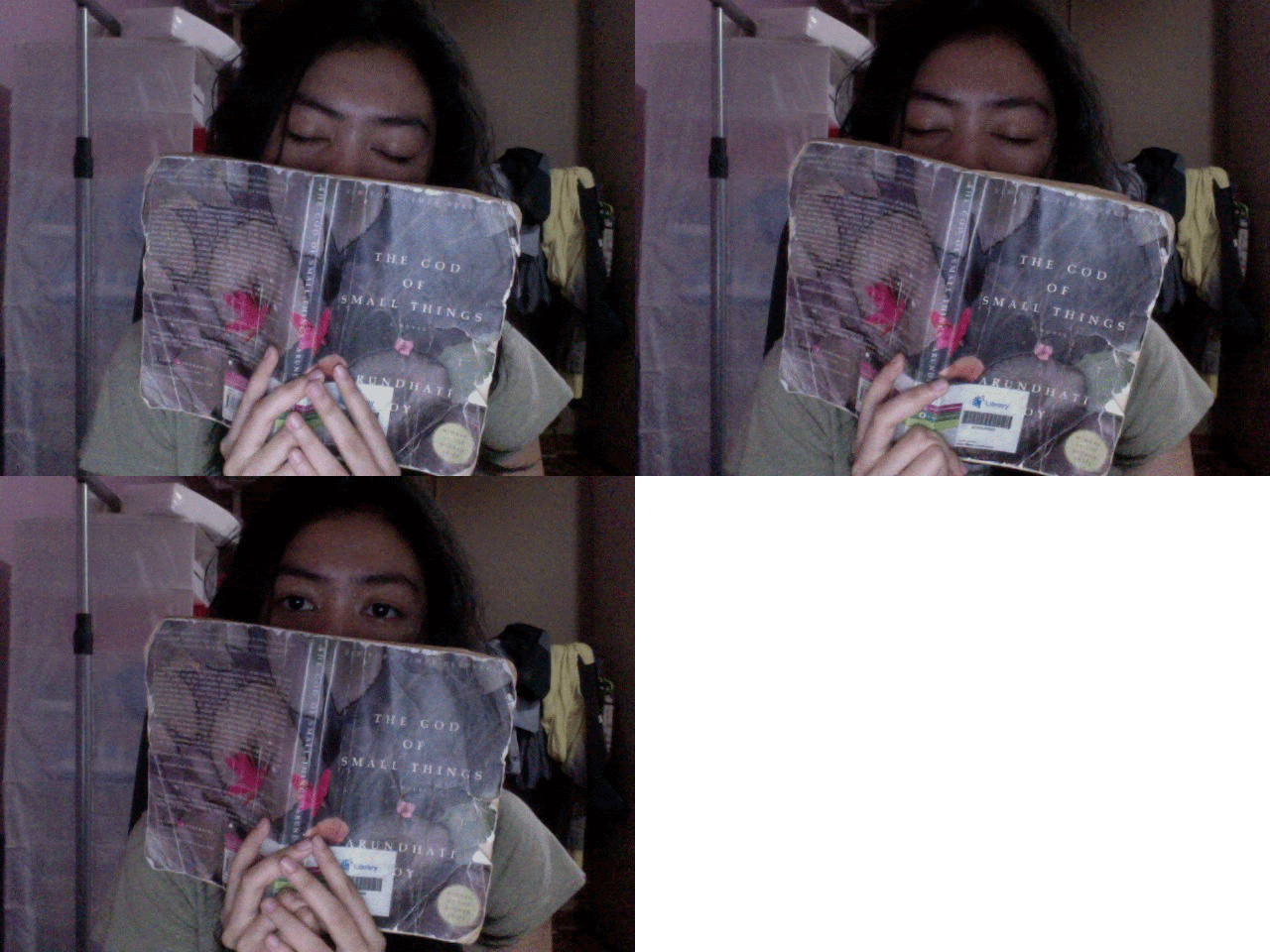
the god of small things was another book i discovered very randomly via two friends' facebook 'likes'--whose taste generally i could identify with, or at least am often intrigued by. to be honest: title is the first element i normally look into upon exploring a book and in this case i jolly well loved it. this was how it went with this book. liked the title, googled it and found a conceivably memorable quote of the book. off to the library to look for it besides several other desired titles that i had safely pocketed, and picked it above all else.
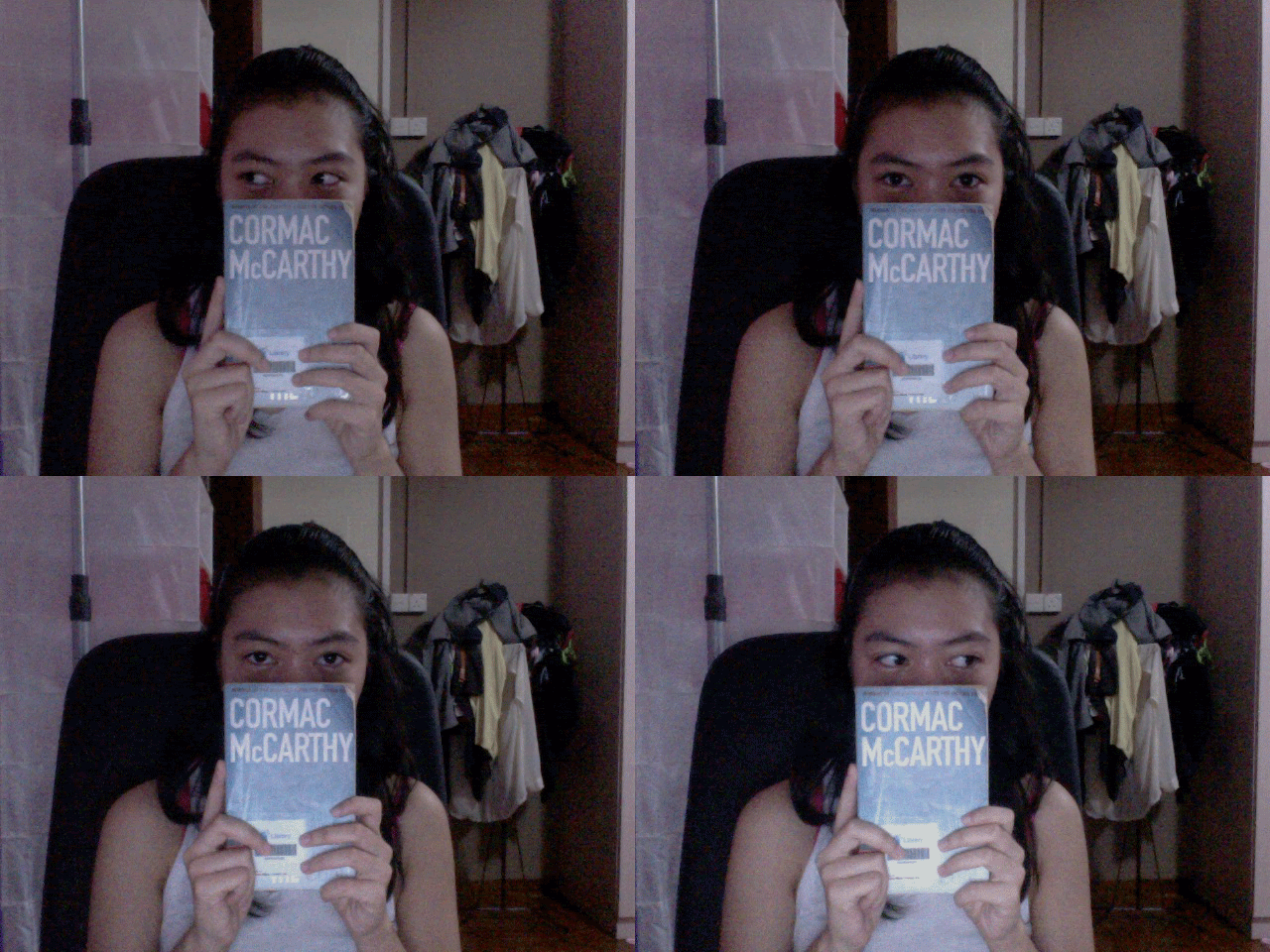
my progress with the book had been initially VERY slow as the god of small things adopted (invented, in one of the reviewers' words) an entirely different kind of language from cormack mccarthy's the road--the book that i finished before an immediate picking of the god of small things. the road, firstly, had done a considerable amount of 'balancing' act to me; the stark, fussless language had become a specific genre of entertainment on its own in my reading experience. it is different from most things i had read before that used language as a powerful tool, that i've also come to love. the god of small things, on the other hand, reminded me of a lot of small things that lurk inside, and rekindled my previous love for this kind of magical, largely nuanced writing. in which it has a lot of layers that should be peeled one by one, without restraint, because the words would not like to be wounded.
so since i was still being in mccarthy mode, language did not hook me up at first (although i got used to and even learnt to love it with a certain, gradual build-up), and nor did the story--everything seemed to be tangled, although in a neat ball, but not always in a pleasant way. i was being very demanding at first, impatiently waiting for a shred of red thread to link all those little events that at first appeared interesting only when standing on each own.
Estha had always been a quiet child, so no one could pinpoint with any degree of accuracy exactly when (the year, if not the month or day) he had stopped talking. Stopped talking altogether, that is. The fact is that there wasn't an "exactly when." It had been a gradual winding down and closing shop. A barely noticeable quietening. As though he had simply run out of conversation and had nothing left to say. Yet Estha's silence was never awkward. Never intrusive. Never noisy. It wasn't an accusing, protesting silence as much as a sort of estivation, a dormancy, the psychological equivalent of what lungfish do to get themselves through the dry season, except that in Estha's case the dry season looked as though it would last forever.
Over time he had acquired the ability to blend into the background of wherever he was--into bookshelves, gardens, curtains, doorways, streets--to appear inanimate, almost invisible to the untrained eye. It usually took strangers awhile to notice him even when they were in the same room with him. It took them even longer to notice that he never spoke. Some never noticed at all.
Estha occupied very little space in the world.
did the world stop giving estha space
or did estha withdraw from the world
but whichever occurs first,
when the world stops giving you space, you'll begin to withdraw
alternatively when you withdraw first
the world is not going to go down with you and with it and
it will eventually stop
giving you space
to occupy
cormac mccarthy's The Road tells of an account of a man and his child, heading south, stripped bare from almost all worldly necessities. paving their way in the ice cold of winter in america, through days uncalendared and moments unmarked. the world is ending. feet wrapped in whatever kinds of wearable pairs of shelters they can find in the road. the book is blackness so bleak and dull and dying, a gray account of such a bare life. a possible way for the world to end feebly, violently.
the narrative plays around with types of grayness, that even the bleakest things have managed to exist in various levels, that there is not only one kind of monotone. dialogues without quotation marks to blend with the story, like an inanimate human being who blends into the background. they are reduced but not dry, filtered yet honest. at first the son's participation in the dialogues seems only to affirm what his father has to say, but along the story he begins to disclose his own opinions which, more often than not, contradict with his father's. pure and scared and little, the son always tries to urge his father to take with them most people that he meets along the way. another little boy around his age. a weak beggar-looking man. he cries and sobs and won't stop until his father tells him to. and he grows up witnessing all kinds of humans barred from humanity and all seas and skies and ashes deprived of colors.
the father is the only man he can cling himself to. the son has no choice but to trust him fully, and the man understands this, by continually convincing his son that they are going to survive and he is not doing the son, nor himself, any harm. "if you break little promises you'll break the big ones," the boy's ball of trust begins to unravel. the man tries to thread it back, intact: "i know. but i wont."
the images conjured by the book are not easy to forget, especially as they alternate with the disturbing dreams the son often has. but they are written beautifully: brutality--and flames that can be not only a source of light and life, but also a warm death.
the road focuses on the relentless journey the father and the son have to go through, as background information is very scarcely provided. but in the beginning the book is supplied with a few glimpses to the previous life, when there are more souls in the family (eg this conversation between the mother and the father):
No, I'm speaking the truth. Sooner or later they will catch us and they will kill us. They will rape me. They'll rape him. They are going to rape us and kill us and eat us and you won't face it. You'd rather wait for it to happen.But I cant. I cant. She sat there smoking a slender length of dried grapevine as if it were some rare cheroot. Holding it with a certain elegance, her other hand across her knees where she'd drawn them up. We used to talk about death, she said. We dont anymore. Why is that?
I dont know.
It's because it's here. There's nothing left to talk about.
I wouldnt leave you.
I dont care. It's meaningless. You can think of me as a faithless slut if you like. I've taken a new lover. He can give me what you cannot.
Death is not a lover.
Oh yes he is.
it's too early to draw this conclusion based only on two books that i have read (this and caribou island), but if i may suggest, don't get any hopes up on books with immediate, cold dialogues that do away without an employment of quotation marks. they are going downhill, always. they slow down, perhaps, look back, at times, but they never climb back to a better state, or their initial points.